



Sustainability is a fundamental element in the development of business activities and in the creation of long-term value. In this context, ESPYTES, as an active part of the automotive sector’s value chain, maintains a strong commitment to integrating ESG (Environmental, Social & Governance) criteria into its strategy and operations.
The company works continuously to mitigate the environmental impacts arising from its industrial activity by adopting responsible practices aimed at improving the energy efficiency of production processes, ensuring the sustainable management of resources and waste, and implementing and maintaining certified environmental management systems.
In line with this commitment, ESPYTES voluntarily prepares an Annual Sustainability Report in accordance with the European reporting standard for SMEs, VSME (EFRAG), including both the basic and comprehensive modules.
The purpose of this report is to communicate transparently to stakeholders the organisation’s economic, social and environmental performance, as well as the progress achieved in ESG matters.
Below are some of the main indicators included in the report, which can be consulted in full in this section.
Energy
ESPYTES’ production activity depends primarily on electricity consumption, and to a lesser extent on gas and diesel.
With the aim of reducing its dependence on fossil fuels and lowering its corporate carbon footprint, the company has installed 1,000 solar panels at its headquarters and production plant, with a generation capacity of 438 kWh.
Thanks to this investment, self-consumed energy represents a significant proportion of total consumption, directly contributing to the decarbonisation of industrial activity.
Greenhouse Gas Emissions (Scopes 1 and 2)
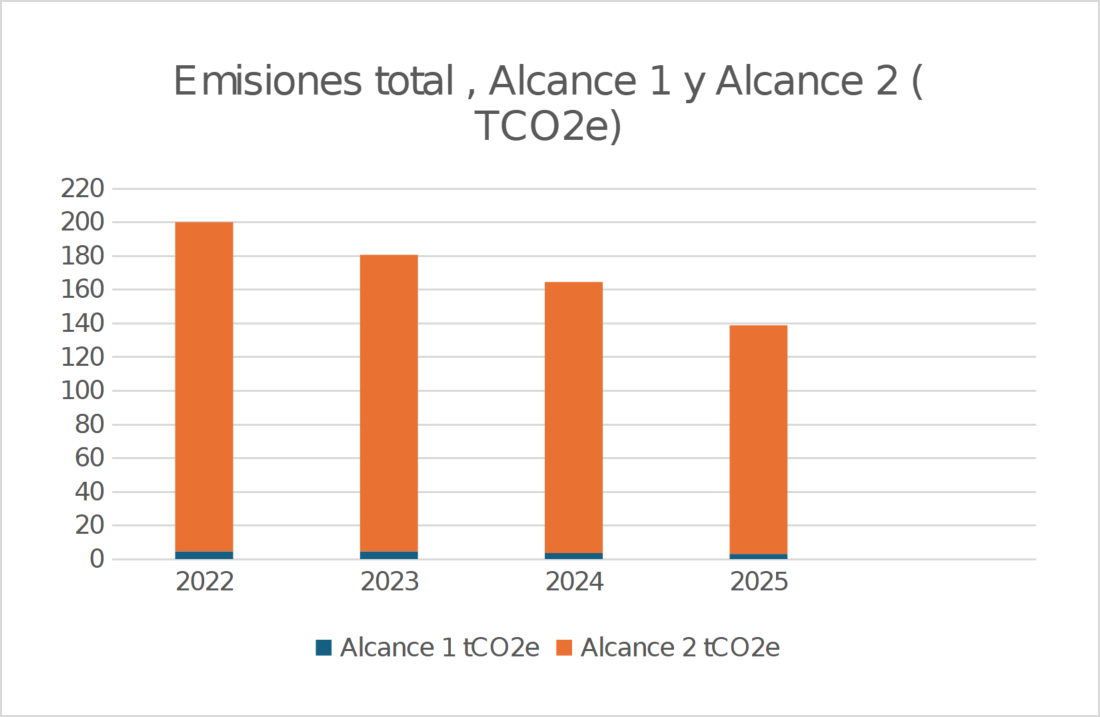
ESPYTES calculates its carbon footprint annually for Scopes 1 and 2, using previous financial years as a reference and employing software certified in accordance with the ISO 14064 standard.
The measures adopted in energy efficiency and the use of renewable energy have enabled a progressive and significant reduction in emissions.
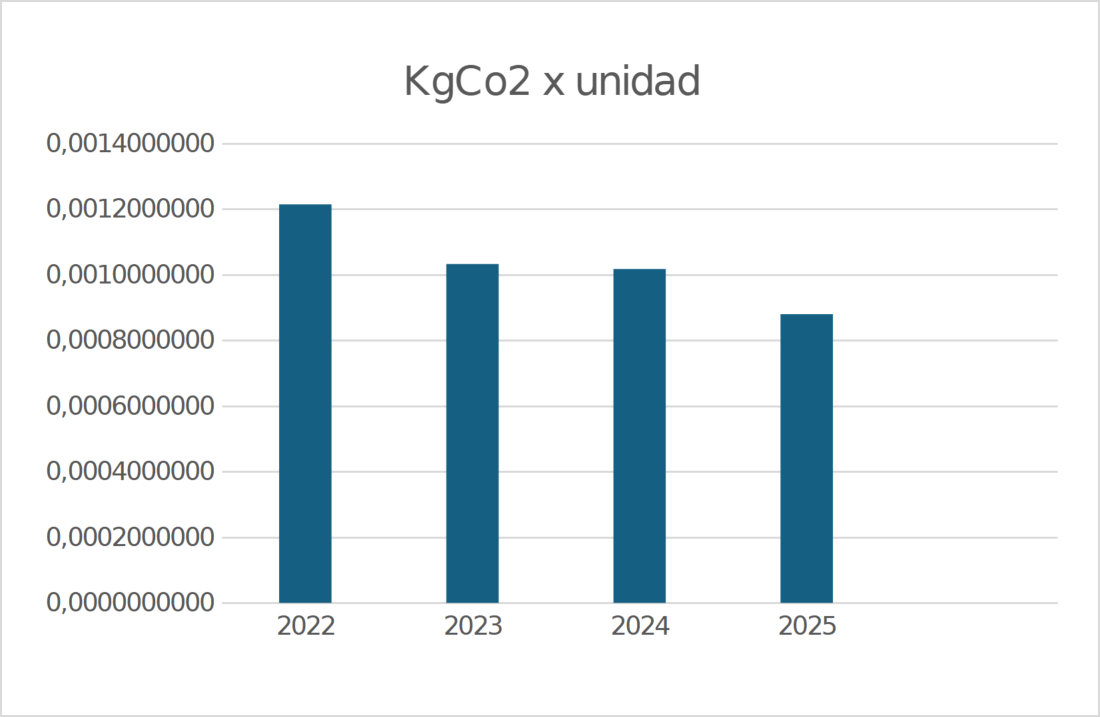
CO2 emissions intensity is analysed through various key indicators, including:
- Emissions per unit produced.
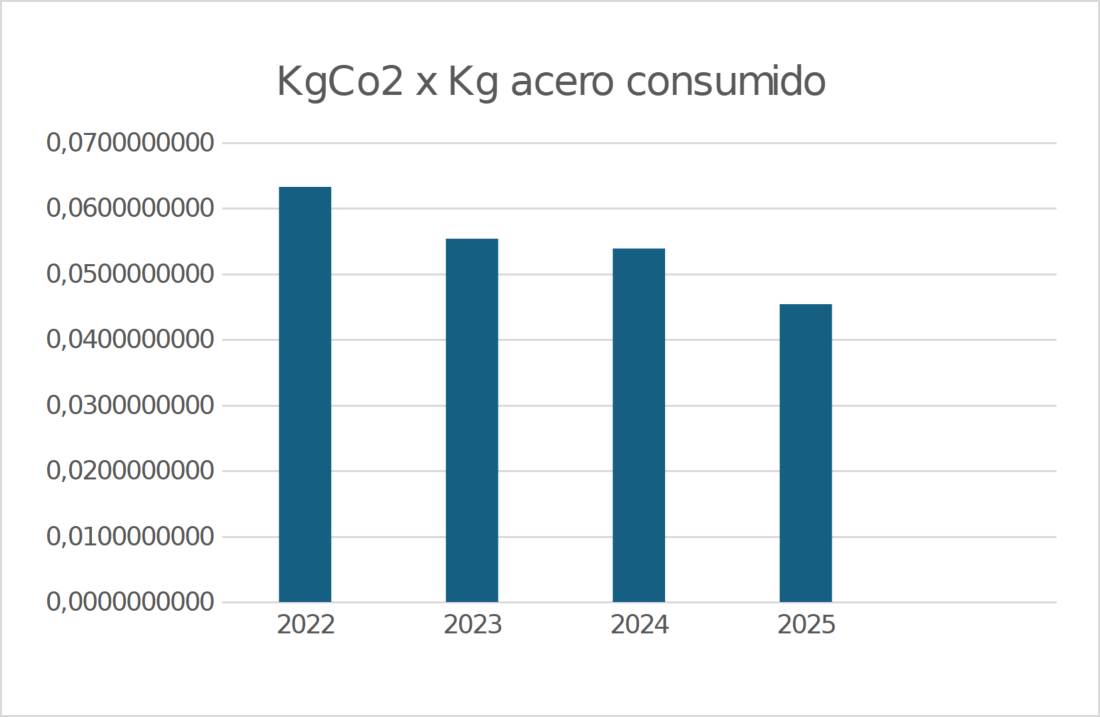
- Emissions per tonne of steel consumed.
Both parameters show a sustained downward trend, reflecting continuous improvement in climate efficiency in both production processes and commercial performance.
Efficient Use of Resources, Circular Economy and Waste Management
ESPYTES implements a responsible waste management policy based on the principles of the circular economy, promoting the reduction, reuse and recycling of materials.
The organisation encourages the reuse of industrial packaging and operates selective collection systems for organic waste, paper and cardboard, plastics, wood, pallets and metal scrap destined for recycling.
As a result of these initiatives, the company achieves recycling rates exceeding 90% of total waste generated, thereby consolidating an increasingly efficient and sustainable production model.
See the full report here Environmental policy in PDF